Changelog
July, 2026
Stabilization & Beta Preparation
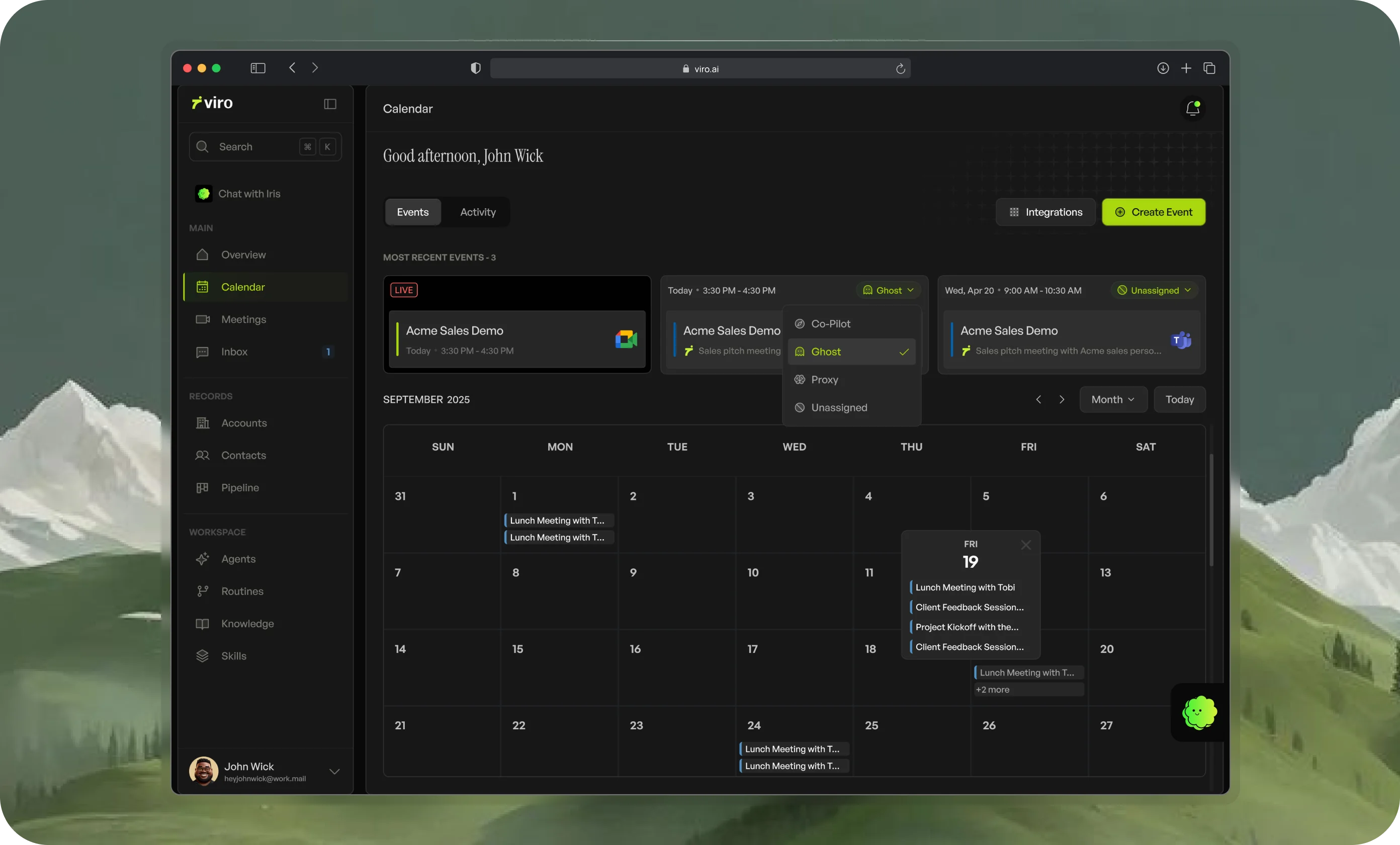
The focus has shifted from building new capabilities to making the platform production-ready. We're reducing latency across the meeting engine and workflow pipeline to ensure every interaction feels responsive, even during longer conversations and complex automation sequences.
At the same time, we're refining the onboarding experience for our first beta cohort, simplifying setup so new teams can start using Iris with minimal configuration. Internal testing continues to surface edge cases around workflow transitions, meeting interruptions, and CRM synchronization, and we're resolving those before external users begin relying on the platform.
June, 2026
Pipeline Development
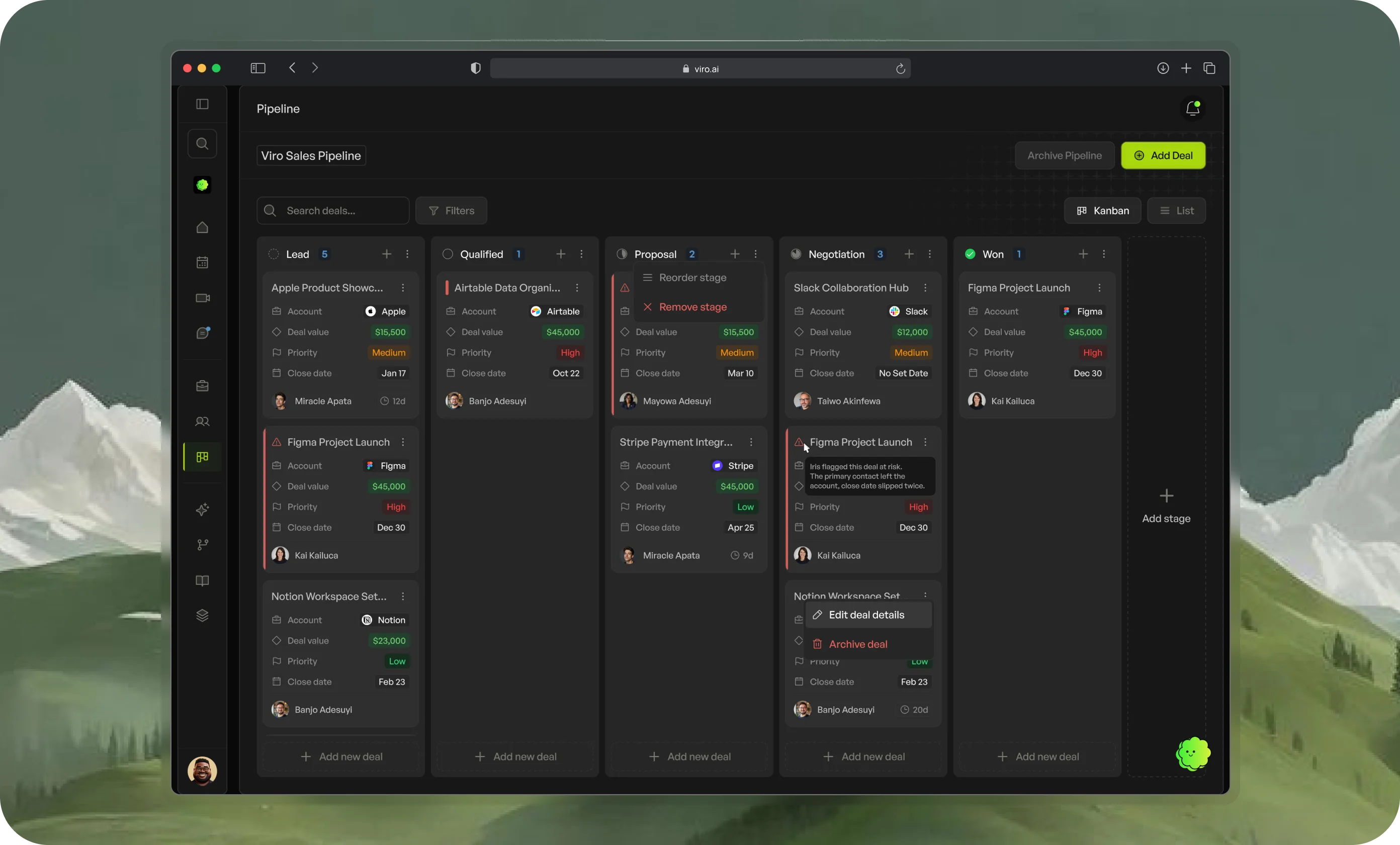
The pipeline is now fully powered by the workflow engine. Every meeting feeds structured data directly into deal progression, removing manual updates and keeping opportunities synchronized across the system.
We've introduced a deterministic pipeline state machine that governs every stage transition, from New Lead to Closed Won or Closed Lost, making workflow execution predictable and auditable. CRM synchronization, automation triggers, and stage progression now operate from a single source of truth.
The interface has also been refined to provide a clearer view of deal health, customer context, upcoming actions, and automation status, helping teams focus on closing deals instead of managing their pipeline manually.
April, 2026
Meeting Engine
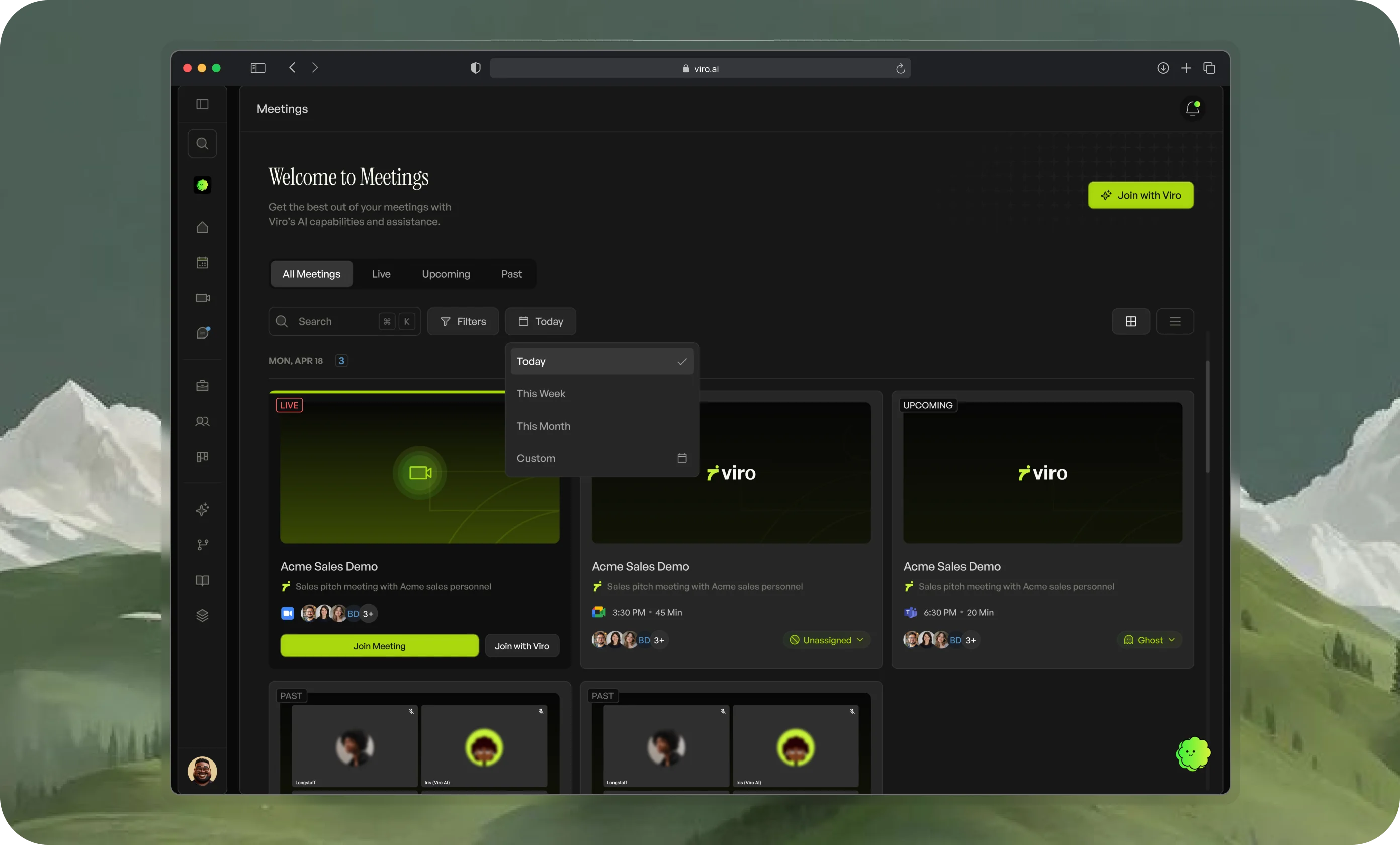
Every meeting is now transformed into structured, actionable intelligence.
The meeting engine automatically extracts key buying signals including budget, decision authority, implementation timeline, objections, customer sentiment, and agreed next steps. These insights flow directly into the workflow engine, eliminating manual note-taking and ensuring no critical information is lost after a conversation.
We've also connected pre-meeting preparation with post-meeting evaluation, allowing each interaction to inform future meetings and automation. Follow-up generation is now context-aware and stage-driven, producing emails, reminders, and next actions based on what actually happened during the conversation instead of relying on generic templates.
March, 2026
Foundation
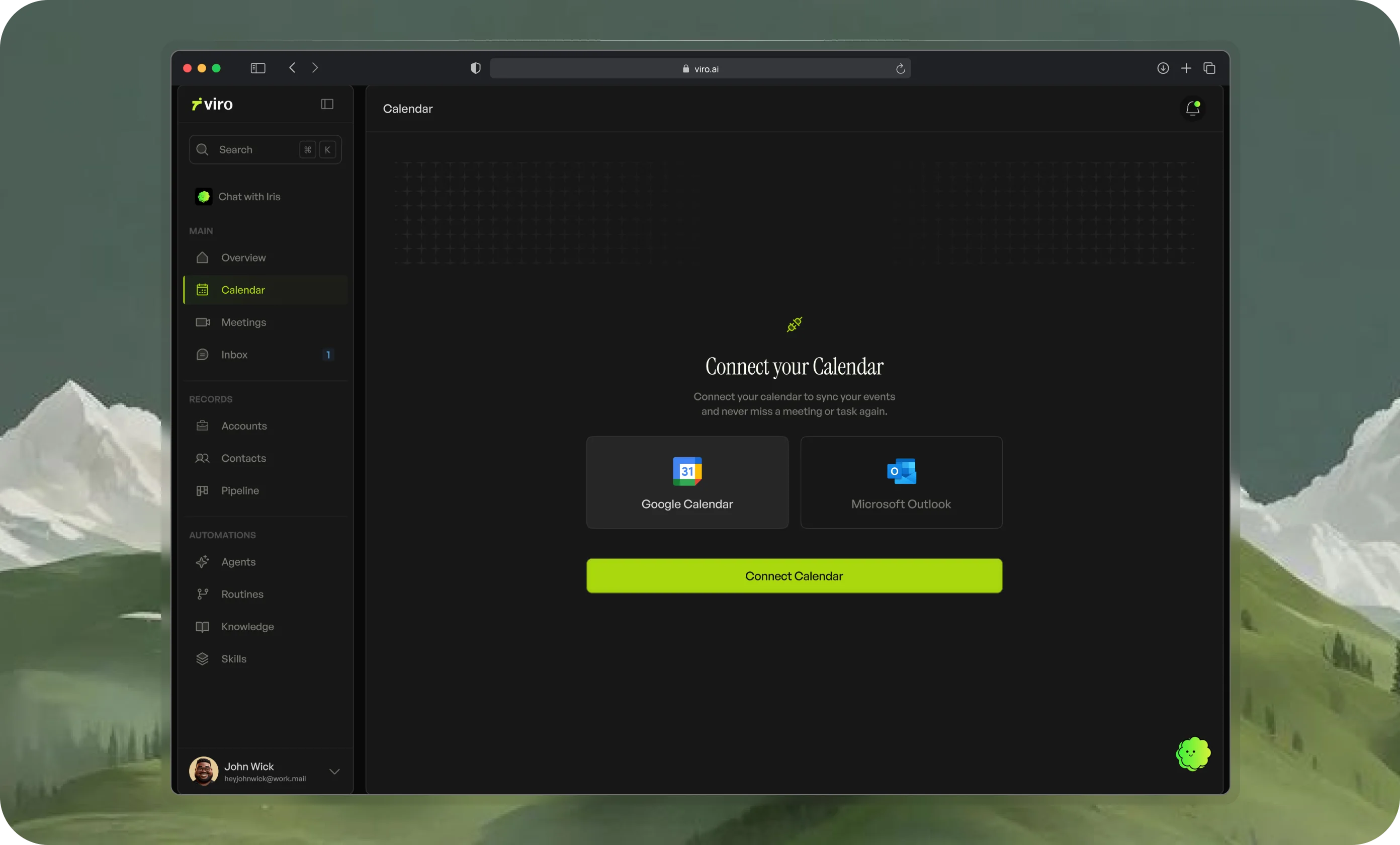
The core infrastructure behind Iris is now fully established.
A deterministic workflow state machine now governs the complete customer lifecycle, from New Lead through Closed Won or Closed Lost, ensuring every stage transition is predictable, auditable, and consistent across the platform.
The workflow engine has become the single authority for CRM updates, stage progression, and automation triggers, eliminating conflicting states between systems. Alongside this, the core product experience has been redesigned around a meeting-driven workflow, positioning every customer conversation as the starting point for everything that happens next—from CRM updates to follow-ups, task creation, and pipeline progression.
Where this goes
after beta.
Next
Full GTM Activation
Expand beyond the initial beta cohort once performance validates our two core success metrics.
Measure success by faster first follow-ups and a measurable reduction in pipeline decay.
Scale onboarding, infrastructure, and customer support in preparation for broader adoption.
Later
Additional Agents
Expand the platform with new specialized agents, including Hermes, Athena, and Hestia.
Each agent will address distinct workflows while building on the same autonomous foundation established by Iris and Nike.
Product direction is defined, with scope, sequencing, and release timelines to be determined as the platform matures.