Do you need a CRM or a salesperson first?
by Banjo Adesuyi
For most founders, the system comes first. A salesperson needs a pipeline they can see, a history of what's been said and a process that already works. Hire first when you have more qualified conversations than you can take and you know what wins. Fix the system first when deals are slipping after calls, follow-up depends on your memory, or everything about each deal lives in your head.
The real question
"CRM or salesperson?" is really "what's stopping me from closing more?". There are two different answers:
- You don't have enough time to sell. You have more good conversations than you can handle.
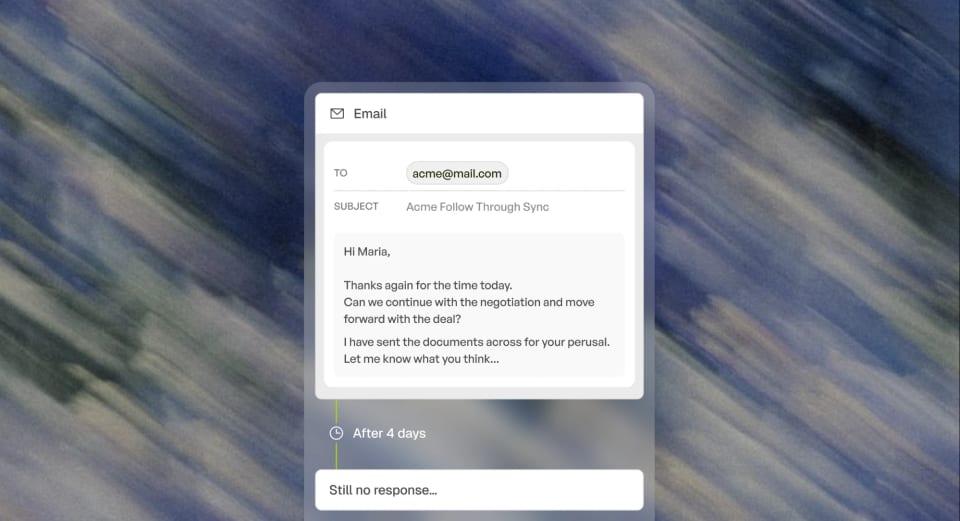
- Deals are slipping through. You have the conversations, but too many go quiet after the call.
A salesperson solves the first. A system solves the second. Hiring someone into the second problem usually gives you two people losing deals the same way.
Signs you need a salesperson
- You're turning down or delaying calls with people who could buy.
- You win a good share of the deals you work properly. The issue is how many you can work.
- You can explain why people buy and what the next step is at each stage.
- Your pipeline and deal history are written down somewhere a new person could read.
Signs you need a system first
- Follow-ups go out days after the call, or not at all.
- "Come back next quarter" leads are never picked back up.
- You couldn't hand a deal to someone else, because the context is in your head.
- You're not sure how many deals are actually open right now.
Why the order matters
| System first, then hire | Hire first, then system | |
|---|---|---|
| What the hire inherits | A pipeline with history and clear next steps | A list of names and your memory |
| How fast they ramp | They can read every deal from day one | They learn by asking you, which takes your time |
| What you learn | Which stage leaks, before you add headcount | Whether the hire is good, mixed up with whether the process is |
| Risk | Low: the system helps you either way | Higher: a hire into a broken process often doesn't work out |
What a "system" means here
It doesn't need to be big. For a founder selling alone, it's four things:
- Every deal in one place, with its stage and next step.
- Follow-up that goes out the same day as the call.
- "Not now" deals saved with a date and picked back up.
- A weekly 20-minute look at what's open and what's stuck.
If you're still on a spreadsheet, here's when to move to a CRM, and how to choose one for founder-led sales.
When to hire after that
Once the system is running, the signal to hire is simple: you're spending more time on calls than you can sustain, and the deals you work are closing. At that point a salesperson adds capacity to something that already works.
Where Viro fits
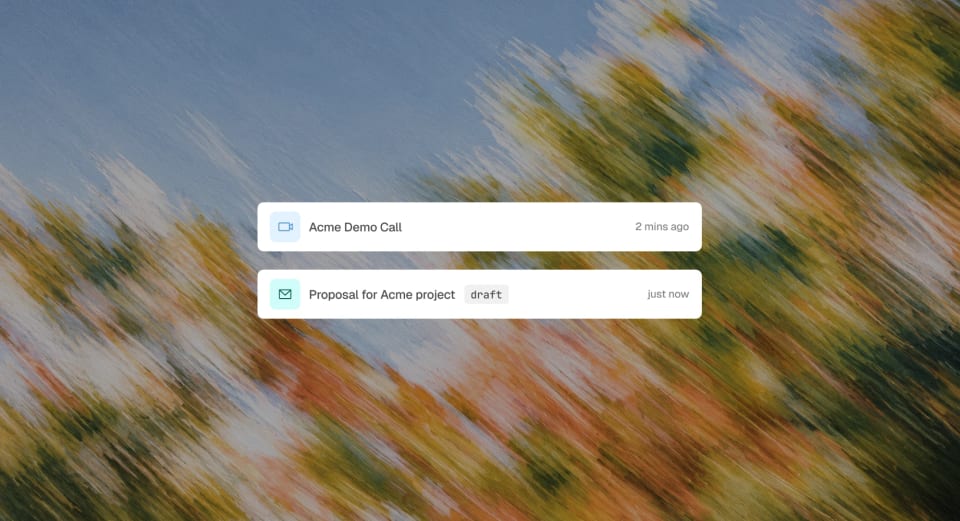
Viro is the AI-native CRM that works every deal until it’s signed, from the follow-up and proposal when a call ends to the check-in months later, so you close more of the deals you already have. The follow-up and proposal are ready when your call ends, your CRM fills itself in from your calls and inbox, and deals that go quiet get picked back up. It gives you the follow-through of a sales team before you hire one. Nothing goes out until you approve it.
Related: How to grow revenue without hiring more salespeople · How to get reps to update the CRM · Spreadsheet or CRM: when to switch · How to increase your close rate